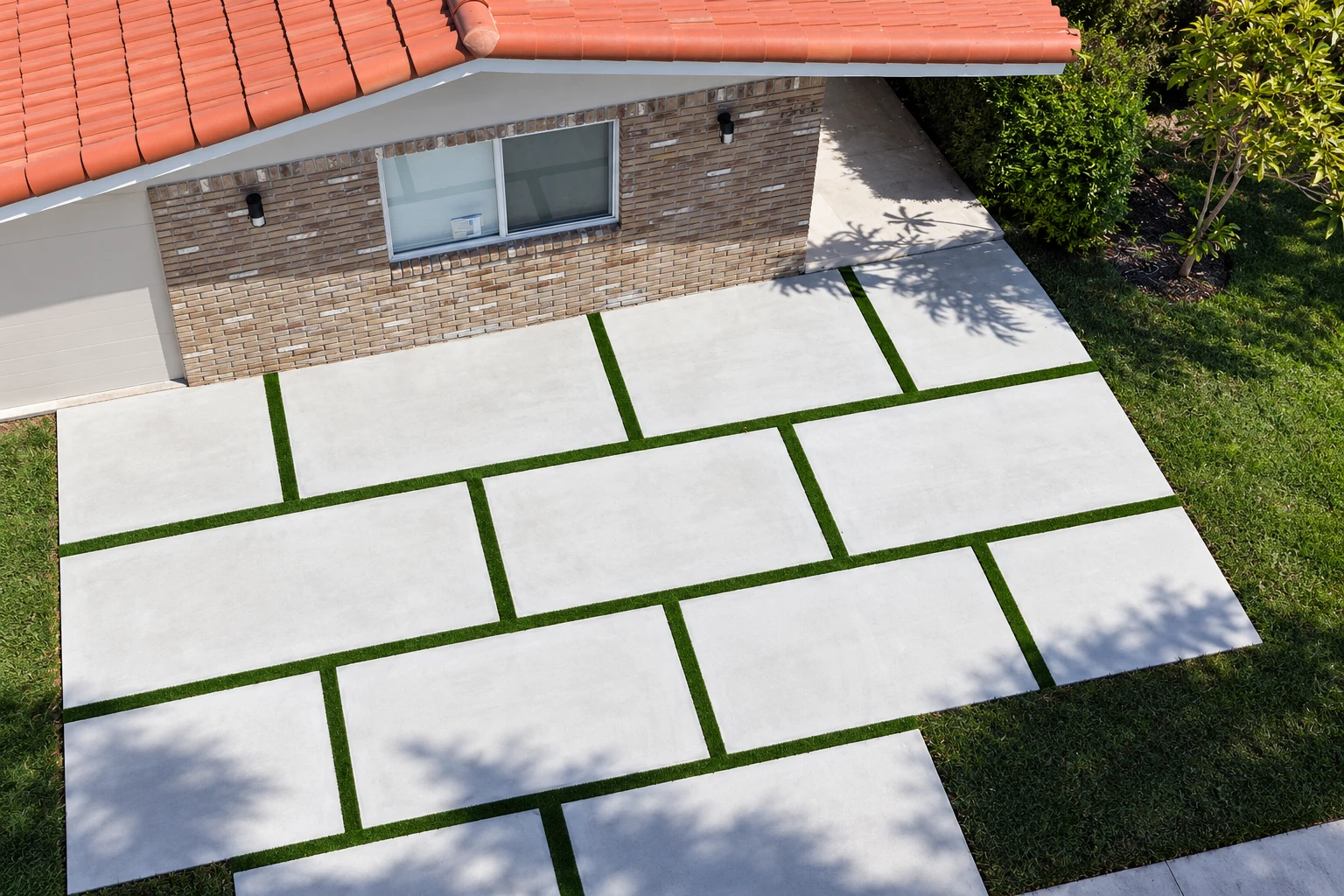
I start by asking how the slab gets used, because a driveway takes wear a back porch doesn't, and that decides the color method. Then our crew breaks out and hauls off any old concrete, digs out the soft dirt and packs the subgrade, the ground the slab sits on, so it doesn't settle later. We set the forms so water runs away from your house, lay rebar, the steel bars that hold the slab together, and pour. While it's still soft we spread the color on top if that's the method you picked, then press in the pattern and cut control joints, shallow cuts that give the concrete a straight place to crack instead of a random one. Once it has cured, the wait while it hardens and gains strength, we seal it. A pretty pattern won't hide a weak base, and since the base is buried on day one it's usually the first thing cut when a bid needs to come down, so I'd rather shrink the patio than thin out what's under it.
Decorative work often sits next to other jobs we do. If the yard slopes toward where the patio will go, a concrete retaining wall can hold the ground back first so the new slab isn't sitting under a bank of dirt. If what you want is a slab indoors, for a shop, sunroom or addition, that's concrete floor installation, and we plan it as its own job.
Color mixed all the way through
Integral color runs through the full depth of the concrete, so a chip or a saw cut shows the same color as the top and the slab ages without pale scars. It won't reach the deepest or brightest shades, so it suits a patio or walk where you'd trade a bold color for the most forgiving finish.
Color hardener spread on top
Color hardener is worked into the surface and gives a harder skin, which is why it's the common pick for driveways and anything that takes traffic. The color sits only in the top layer, so a deep gouge shows gray underneath, and it has to be spread evenly or the color comes out blotchy.